Friday, 27 March 2015

Riddles of the Magna Carta


What has no hinges, key, or lid, but inside gold is hid?

This riddle was set by a pupil from Curry Mallet Primary School near Taunton whilst working on 'The Riddler' Storywalk with me over the last few weeks. I'll let you work a little before giving you the answer, but I didn't get it for ages! 


So why am I working with Curry Mallet Primary School?

It was over a year ago when the school began it's preparations for the 800th anniversary of the signing of the Magna Carta being June 13th 2015. They lined up a whole series of projects with Heritage Lottery Funding and Somerset Art Works and it was through this connection that they approached Storywalks about creating a trail. You may be aware that Baron William Malet, Lord of Curry Mallet was one of the 25 signatures on the original manuscript and so the village has been gearing up for celebrations for some time.


So what are storywalks?

The easiest way to explain is to describe a book being ripped up page by page and placed on trees down an avenue. To read the book you must walk down the avenue stopping at each tree and page in turn. Storywalks do this but digitally, so rather than breaking up a real book (which would be a shame) we choose which trees, or more specifically which location a text will trigger.


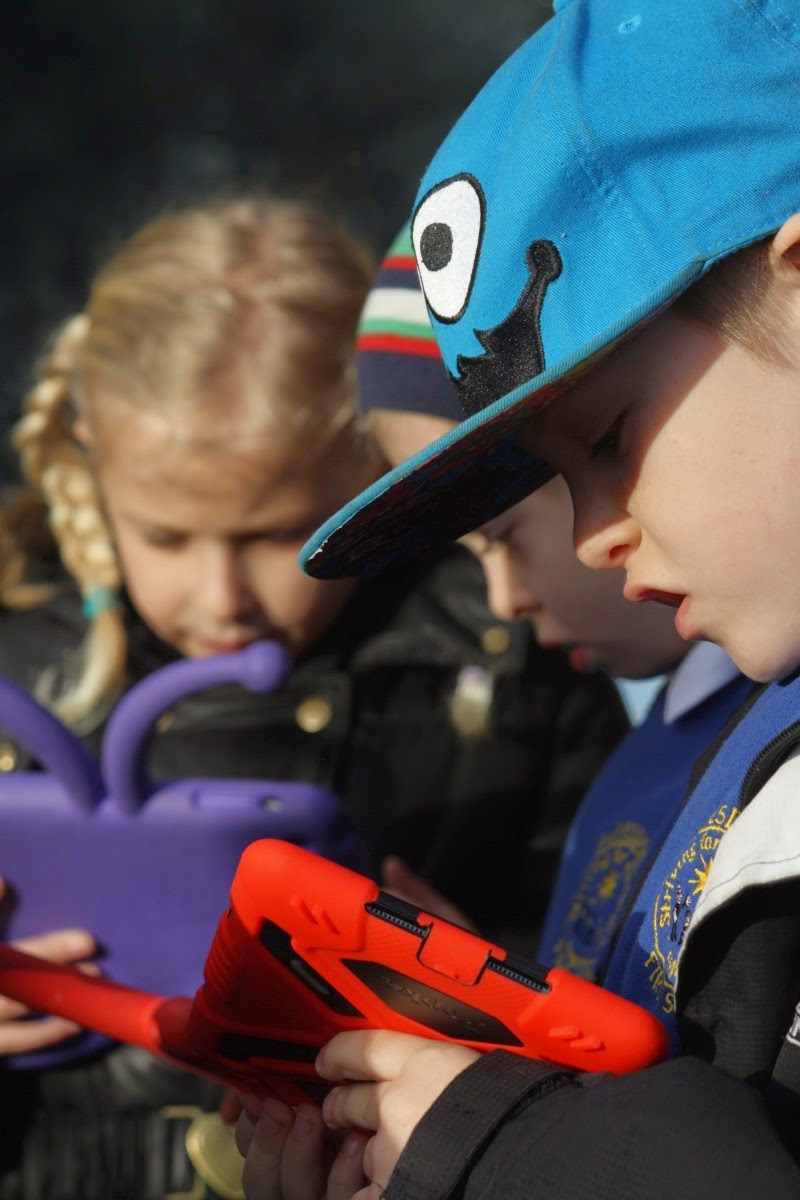
Within minutes the pupils understand how the system works and are off, running across the school fields, revealing the stories. It becomes like a treasure hunt with story and narrative revealing at different spots as the gold. It is quite something to see and I relish the reluctant readers taking their turn to lead the pack and trigger the content. 

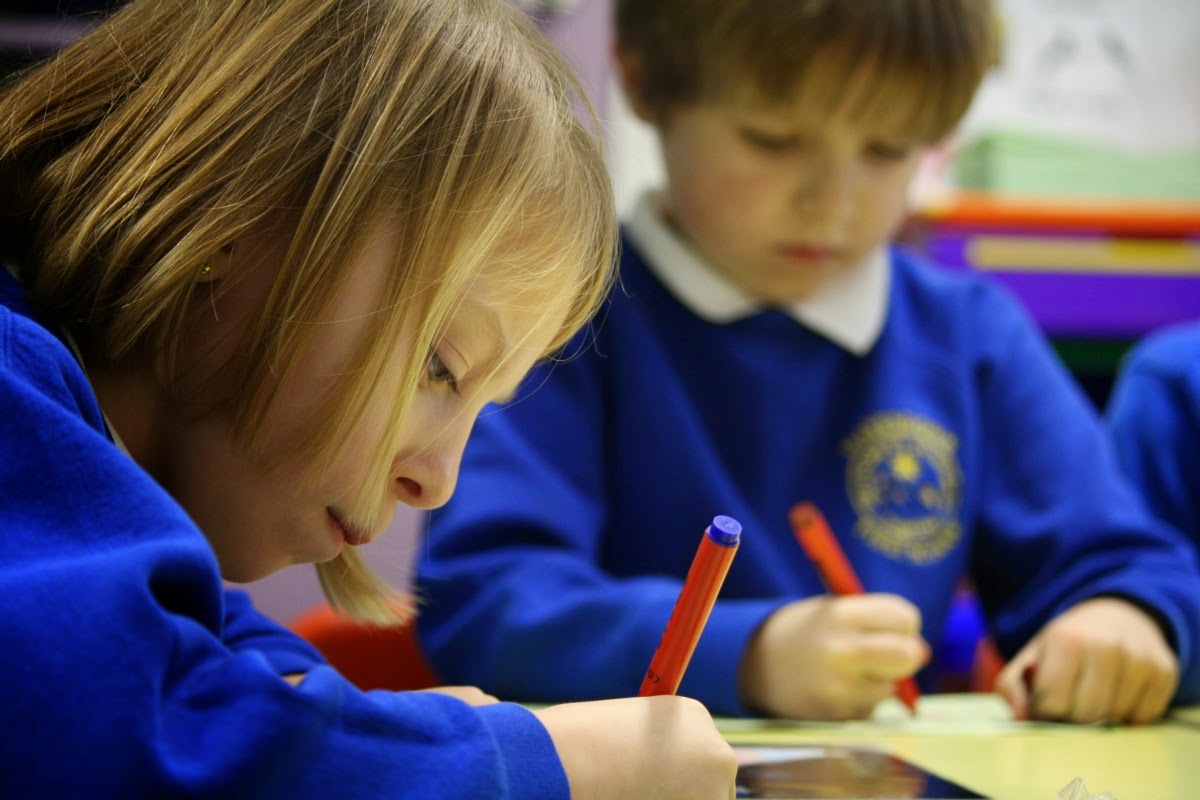
But storywalks is only a small segment of the day, a lot of the session is class based, writing and crafting their own riddles or stories to pop into the Storywalk engine. Once this is done we then head out again and reveal their own words tethered to their school field.


So three days are already complete with the school at Curry Mallet, with two still to go and we've already started on 'the biggy', it's called 'The Weaver of Curry Mallet' and is a fictional tale set in the village. 

There once lived a weaver, in Curry Mallet, Somerset, whose skills were used to repair cloth and clothes for well pursed people. So great and desired was her craftsmanship that a poem or ditty would often follow her about. 
When the wear of time is such a to do,
And the weft and weave have run right through.
She'll sew a seam so straight and true,
And stitch a patch as good as new. 
Well one day a young man brought her a drawer of tapestries, which were in dire need of her skills and although this box was very heavy he did not seemed burdened by its weight and lightly placed it down in her workshop. She then set to making him a ticket and valuing the job before her.

The story continues asking the weaver to walk with him in the evenings whilst the tapestry is in her care and tell stories as they walk. This is where the pupils step up to lace and weave their own tales along the trail and inside the Storywalk. This formula plays to the strengths of each child's imagination, it energises their reading and writing skills and opens possibilities of narratives which before were not possible. 

For example you can ask the reader to stomp on the bridge to wake the troll, or not to whistle along the path as the wild dogs will be summoned, or even perhaps to walk around the font three times just for luck. All these things you can do in a Storywalk, interactions within a storyline which seem much dryer in the classroom.


This story will begin at the gate of Curry Mallet School and reveal as you journey along the path into the village, following the stream much of the way. The fabric of the tale sits inside a world before the modern day but not too long ago, perhaps when fields were hoed by hand and horses set to the plough, some time in the past 800 years perhaps.

On the story trail expect to meet talking cattle, warty toads and mischievous dragons. I would hope that the children of the old Curry Mallet village being excavated during the festival, would enjoy these just as much as you today. For me those long passed residents feel like the audience for this project in a peculiar and curious manner.

So join us on Saturday 13th June, but make sure you have a clear head to solve riddles, keep a bright eye out for the Forest Tree King and what will happen in The Tale of the Weaver of Curry Mallet.

More details about the events here http://www.currymallet.org/magna-carta/curry-mallets-magna-carta-celebrations/

For Storywalks on the day, http://currymallet.storywalks.info and open in your smart phone then journey to the trail head.

See you on the 13th to find out, oh and the answer to the riddle - An Egg!

Saturday, 21 February 2015

Hayesdown Academy and the Hedgehog Safari Storywalkers


For six weeks throughout January and early February storywalks has had a residency with Claire Vowell, Jo Plimmer and myself at Hayesdown School in Frome with year 2 teacher Julie Turner pictured above and classroom support Liz Paget. The first day began with introducing ourselves then launching straight into the story called 'The Apple Pip Girl'.


It is a linear tale which journeys along a path and returns back along it again, which can be very interactive and a great start to finding the measure for the class, but also great for the class to get the measure of us! I have told this story to year 2 pupils many times, it's really accessible and lays the foundations for how a journey happens in the storywalks as well as on paper, or even in the air for that matter. But this was the first time we had worked properly with children so young through the storywalk engine, rather than just a taster session.


When the story was complete the pupils were then asked to draw this journey on a long piece of sugar paper using drawings and words as they felt appropriate. For me it was especially interesting as these were year 2 pupils, all 6 - 7 years old and still on that long and tricky road to reading. The term emergent readers is really accurate here and even for those with strong linguistic skills there were words which tested and stretched them.


So what was the format of the residency and how did it come about?

Storywalks has been involved in quite a few schools in much the same way authors and illustrators visit, but interestingly funding for this project has come from a series of grants including a major one from the SHINE Foundation. They invest in teachers who want to do something different with education and Claire Vowell was keen to take storywalks to other schools inside her cluster. Feelers were put out through the school networks and Jo Plimmer a key member of the storywalks team liaised with several schools all of which were keen to get involved in this pilot. 


So it was mid January, gloves on, booted and suited we set out and grabbed some stories out on their field, as prior to arriving at Hayesdown Academy I had prepped up a story in their school grounds ready to reveal at the end of the first day. This was to be the first of many such excursions, revealing text and images (and more) in their school grounds. 

But it should be said here that these are relatively short excursions, we go out, trigger the story, grab photographs or notes and then back into the classroom. Long sessions outside are not appropriate at this time of year, but nor are they really necessary.


Working with this age group was a real test for myself and Storywalks, we did not know how well they would respond to a predominantly text based journey and whether we would have a similar success as with the years above.


Over the six weeks we gradually immersed the pupils in stories but what we were not expecting was the creativity and support from their teacher Julie Turner. At every point Julie improved and added to what we were doing, she was able to slip in techniques and compartmentalise tasks in such a way that her students could progress, for Claire and myself this was fantastic.


Hedgehogs class has a wide range of learning abilities with perhaps more than its fair share of special educational needs pupils. But what really bowled us over was the work that Julie was doing whilst we were away, previous schools had pushed curriculum aside for the day but then little would move for the week until we were back in class again.


Amazingly Julie was really proactive in using Storywalks in our absence, so we'd get back in the following week and the pupils had all written up their stories, or they had been out and tested their locations. One of the main reasons for this was that some of the grant money had provided for a class set of 5 GPS enabled iPads loaned to the school throughout this period. Having these enabled Julie to see other opportunities for enhanced learning beyond what we were already doing.


A great example of this is the two (yes two!) new storywalks stories which evolved at Hayesdown. The first actually isn't a story at all, it's called 'The Griddler' and is super simple, first you need to draw a map of the school grounds (see image) and place a simple map grid over it with letters along the bottom and numbers up the side. A quick photo of this for the first image in the Storywalks engine followed by ten minutes prepping up the zones with correct co-ordinates. They are to be put into the directions element of the storywalk engine and immediately you have an interactive and physical maths lesson ready to roll.


But this was not the end, as at each location you could add little maths task, like how many rocks are there in the circle, then use the answer as a component to the next direction. Or simple interventions like pump your arms as you count down from fifty, or count in fives up to one hundred. Finger numbers are good too but on a summers day they could be more complex, you could use a tape measure or compass to find a bearing, perhaps even the dial on a clock.

Loads and loads of potential, very exciting as I have been so focused on the literacy aspect the maths element was yet to surface. I have a feeling there is great potential here just waiting to be developed.


And the other story, the clue is in the title! But you'll have to invite us in to do a Safari and all will be revealed!


Immense thanks to Julie Turner, Hayesdown Academy Head Sue Heal for inviting us in, Liz Paget classroom assistant (amazing support) and all the parents who came in to read their children's stories out in the wilds of the school fields. But the real stars are the pupils, the essence of Storywalks is to make reading and writing a more dynamic and engaging process. Unchaining it from the classroom, adding a breath of fresh air to literally clear their heads seems to be just the ticket.


Next stop for me is Pembroke Dock School in Wales, followed by a residency at Curry Mallet school as part of their Magna Carta project, plus there are some taster days all over the place. If you would like to have a taster day or even a residency then please do get in touch. 


Friday, 9 January 2015

THE STORY CONTINUES...

Last summer I released stories into the wild along the Coleridge Way in West Somerset, with each book's first pages were penned by acclaimed artists and authors Jackie Morris, Victoria Eveleigh and Catherine Hyde. Finders of the book were then asked to continue the tale or add an illustration. 

This exhibition features the stories and drawings that were told - did you contribute to the final tale?

The exhibition opens at Number Seven Dulverton on Saturday 14th February and runs until Saturday 21st February. 

Open Monday to Saturday 10am - 5pm and admission is free
The 2014 Coleridge Way Storybox projected was funded by ARTLife
Throughout the exhibition week there will also be a 'storytrail' for you to follow around Dulverton with a chance of winning a selection of books by Victoria Eveleigh, Jackie Morris and Catherine Hyde.